At the end of the Second World War, in the 1950s, plastic – which had played a key role during the conflict – began to spread across the globe. It could be used for just about anything, so it ended up in almost every everyday object. Today, almost eighty years later, scientists are trying to find ways to manage this material because of its adverse effects on the environment. What might have happened if its impact had been studied earlier?
This question, applied to current developing technologies, serves as the starting point for GREENS, a European project that aims to apply sustainability criteria to the design and manufacture of micro- and nano-robotic platforms. It is funded by a Marie Skłodowska-Curie grant under the Horizon Europe programme. For its development between 2025 and 2029, this project has received European funding of over 3.7 million euros.
A project in which the Aragón Institute for Engineering Research (I3A) at the University of Zaragoza is participating, through researcher Marco de Corato of the Fluid Dynamics Technologies Group (TFD).
For De Corato, the challenge lies precisely in not repeating the mistakes of the past. Whilst plastic was used on a massive scale for decades before its consequences were assessed, with nano- and micro-robotics there is still time to act before these technologies are fully commercialised.
The aim of the GREENS project is to incorporate the 5R principle (reduce, recycle, rethink, repair and reuse) throughout the entire life cycle of these technologies. This encompasses the design and manufacturing processes, as well as their end-of-life disposal or destruction. The fundamental aim is to plan ahead and incorporate sustainability into the initial design stages of nano- and micro-robots, so as to avoid having to deal with the problems arising from their use at a later stage.
This is an extremely small-scale technology which has attracted scientific interest due to its precision and its potential applications in a wide range of fields, such as biomedicine and the environment. In the future, for example, nano- and micro-robots could be used to deliver drugs in a targeted manner, act on bacteria within the body or play a part in water purification processes. However, their development raises questions regarding the materials to be used, biocompatibility, degradation and waste management.
GREENS is coordinated by the University of Barcelona and involves a network of universities, research centres, private entities and partner organisations. This collaboration brings together universities from Spain, Italy, Hungary, Austria, Germany, Switzerland and Sweden, with partners from Denmark, the Netherlands, Portugal and Greece. Given the multidisciplinary nature of the problem, the project involves chemists, physicists, engineers, biotechnologists, biologists and specialists in various fields of applied research.
Within this network, Marco de Corato acts as supervisor from I3A Unizar. He supervises MohammedJavad Nouhi (MoJa), an Iranian researcher working on his doctoral thesis in collaboration with the University of Strathclyde in Scotland. This institution, with which De Corato has previously collaborated on other projects, is itself one of the centres associated with this Doctoral Network.
The work carried out at the I3A focuses on computational modelling. De Cortao and MoJa develop computer simulations and physical models that enable us to understand the behaviour of these micro- and nanorobots at scales where the physics is very different from that of macroscopic objects.
Thanks to these computational models, it is possible to predict how changes in geometry, materials or design affect these tiny devices as they move or perform a specific function. This reduces experimental costs, but also aids decision-making for the network’s teams that manufacture materials or validate the devices in the laboratory, with a view to sustainability and reusability.
Marco de Corato, a Marie Skłodowska-Curie Doctoral Network fellow, is working on a specific topic linked to his doctoral thesis, within a network that gives him access to various institutions where he can undertake placements, forge relationships or find common ground.
“These are demanding programmes, but also very valuable ones,” says De Corato, whose own career helps to illustrate the importance of these European networks. After completing his PhD in Chemical Engineering, he worked in London as part of a European project and subsequently moved to Barcelona on a Marie Curie fellowship. There, at the Institute of Bioengineering of Catalonia (IBEC), he began studying the behaviour of nano- and microrobots. This work, carried out in collaboration with experimental groups at the I3A, has continued since he arrived at the University of Zaragoza.
At the I3A, this researcher, who is part of the Department of Materials and Fluid Science and Technology, says he has found an environment that has fostered his personal and professional development: “They have always been there to support me at every stage of my work here. That wouldn’t have happened at another institution, where I would have been just another face in the crowd.”
The GREENS European project. Further information: https://www.greens-msca.eu/
Official project website. CORDIS: https://cordis.europa.eu/project/id/101169173
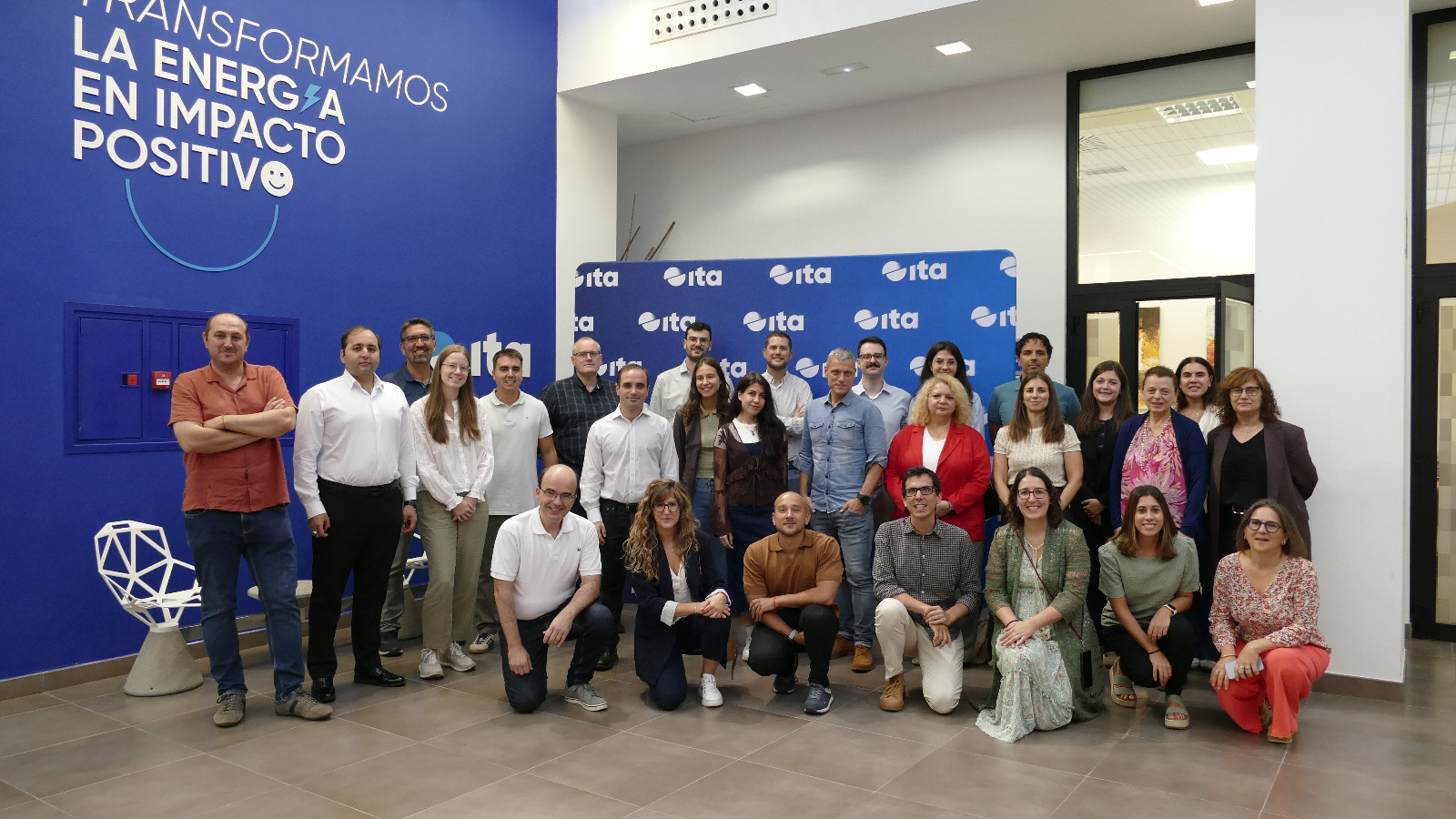
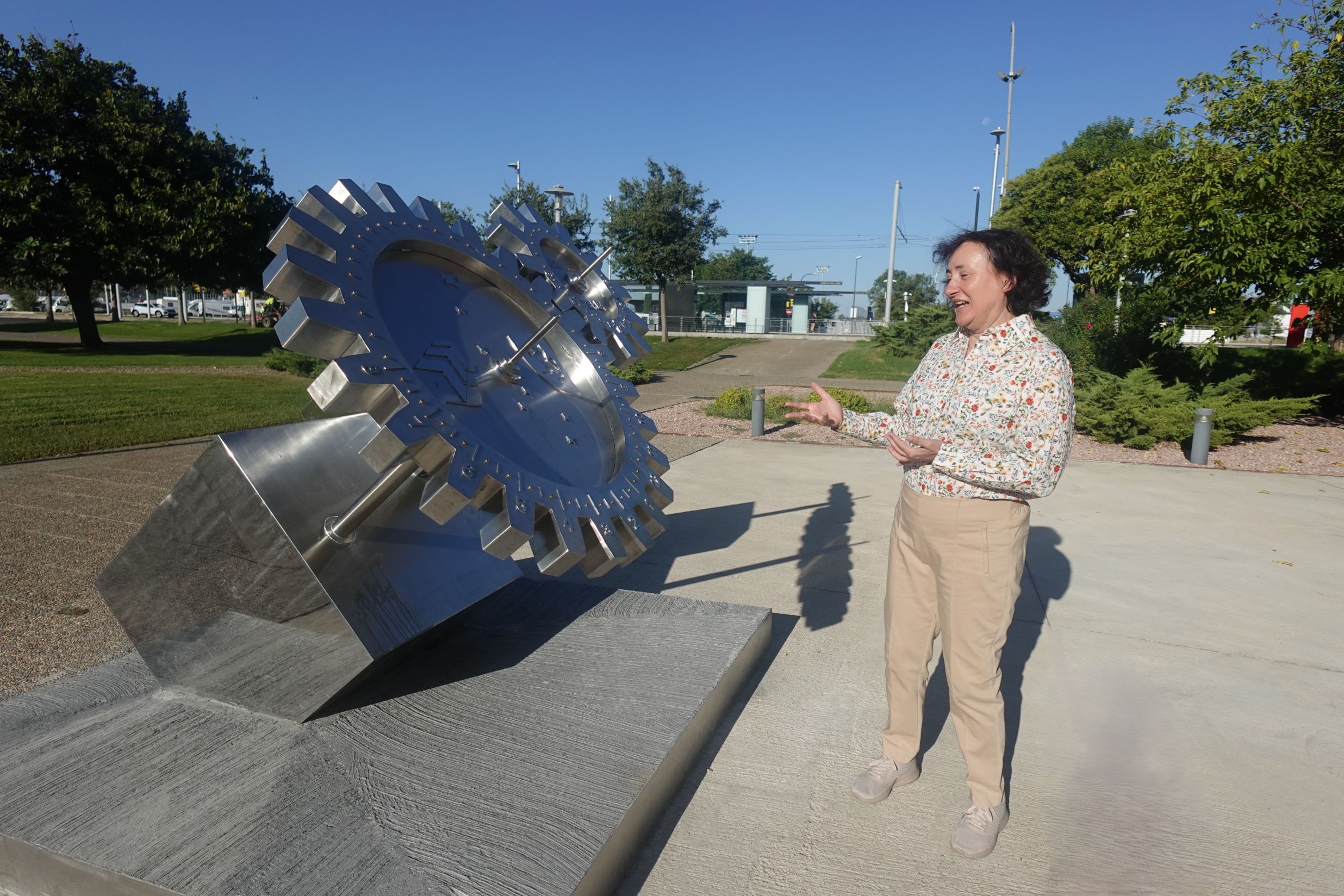
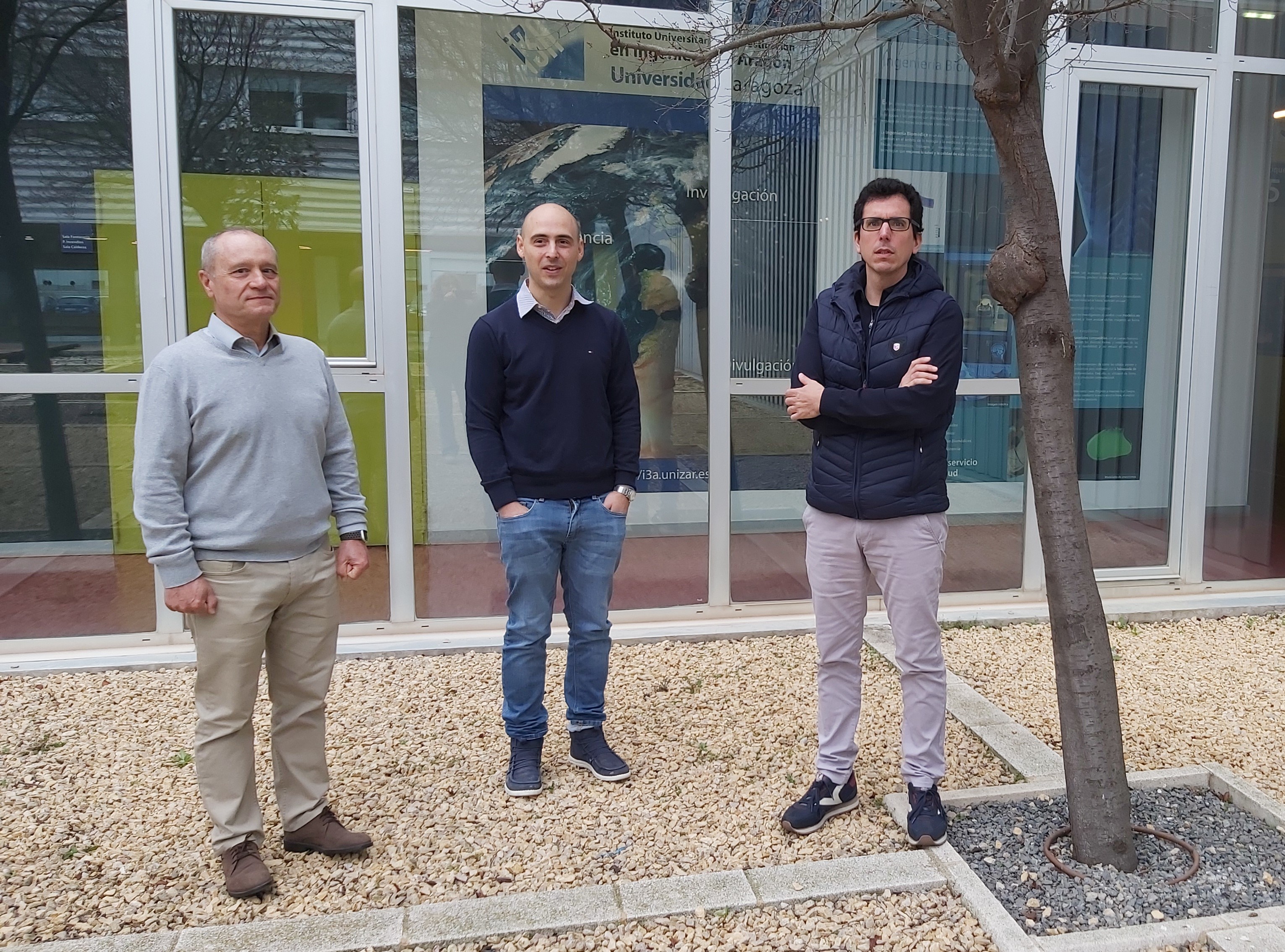
Photograph: Marco de Corato, Norberto Fueyo y Salvador Izquierdo, from the Fluid Dynamics Technologies (TFD) research group at I3A Unizar.