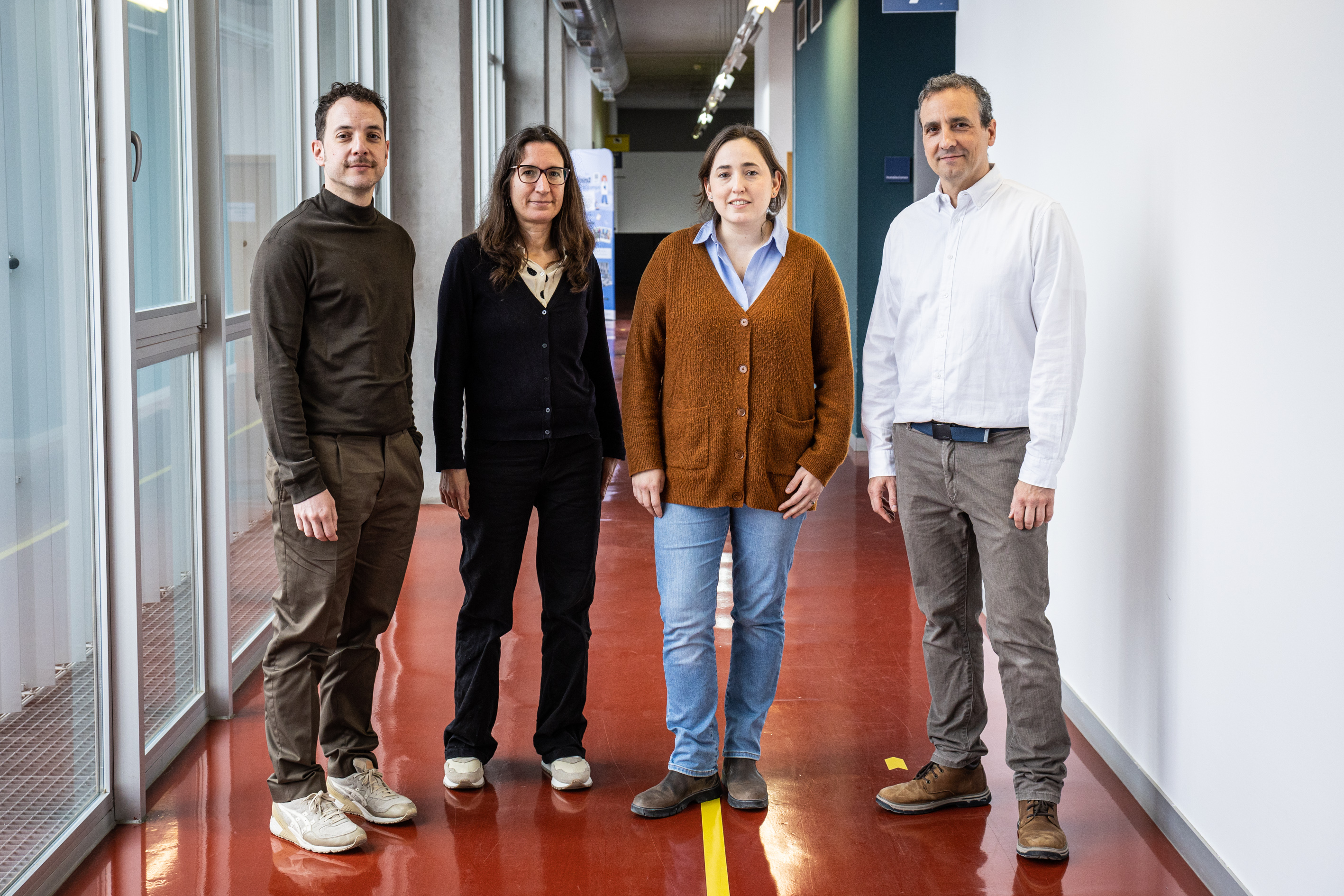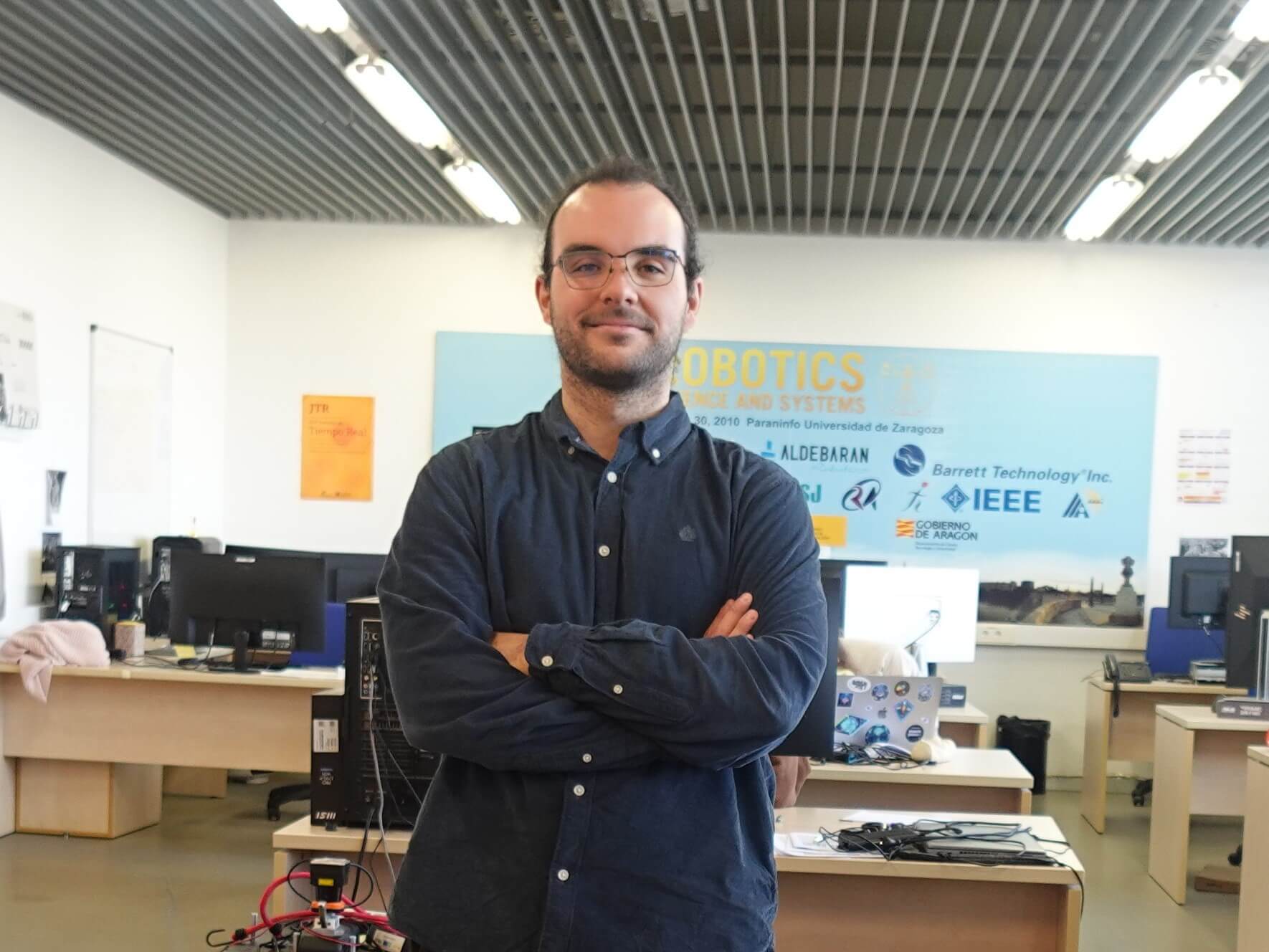
Alberto Jaenal Gálvez joins the Aragón Engineering Research Institute (I3A) at the University of Zaragoza with a Marie Skłodowska-Curie (MSCA) postdoctoral fellowship. He will conduct his research in the Pose-Aware Visual Place Recognition (PAVPR) project, under the supervision of professor and researcher Javier Civera, an international leader in computer vision and robotics.
This project addresses one of the major challenges of autonomous navigation: robust recognition of locations in changing environments. By integrating explicit pose information into visual recognition models, the project seeks to improve the accuracy and reliability of localization systems. Its results will contribute to the advancement of mobile robotics, autonomous vehicles, and intelligent mapping technologies.
He is one of three postdoctoral researchers joining the University of Zaragoza with funding from the MSCA Postdoctoral Fellowship (Horizon Europe) call for proposals.
Marie Sklodowska-Curie postdoctoral contracts are an initiative of the European Commission lasting between 12 and 36 months to support the training and professional development of postdoctoral research staff.
Its prestige is internationally recognized, as it evaluates high-level research in the early stages of postdoctoral research careers and competes at an international level. In addition, it rewards not only the excellence of the project, but also the track record of the postdoctoral researcher applicant and the Principal Investigator (PI) or supervisor, as well as the quality of the host institution.
Engineer Alberto Jaenal Gálvez will be working at the I3A. This year, he began a Juan de la Cierva postdoctoral contract at the University of Zaragoza on Visual Place Recognition. He arrived at the Aragonese public campus after a research journey at Facebook Reality Labs in San Francisco (USA) and at the Ericsson Research Institute in Stockholm (Sweden), where he worked since 2023, expanding his research experience by combining academic and industrial research, studying applications of wireless connectivity in robotic localization and perception.
He received his PhD in Mechatronics Engineering in 2023 with Cum Laude honors. For his thesis, he was awarded the Extraordinary Doctorate Prize from the University of Malaga and the runner-up prize for Best Doctoral Thesis on Computer Vision from the CEA. He has published in the most prestigious conferences and journals on computer vision and robotics, where he also participates as a reviewer.
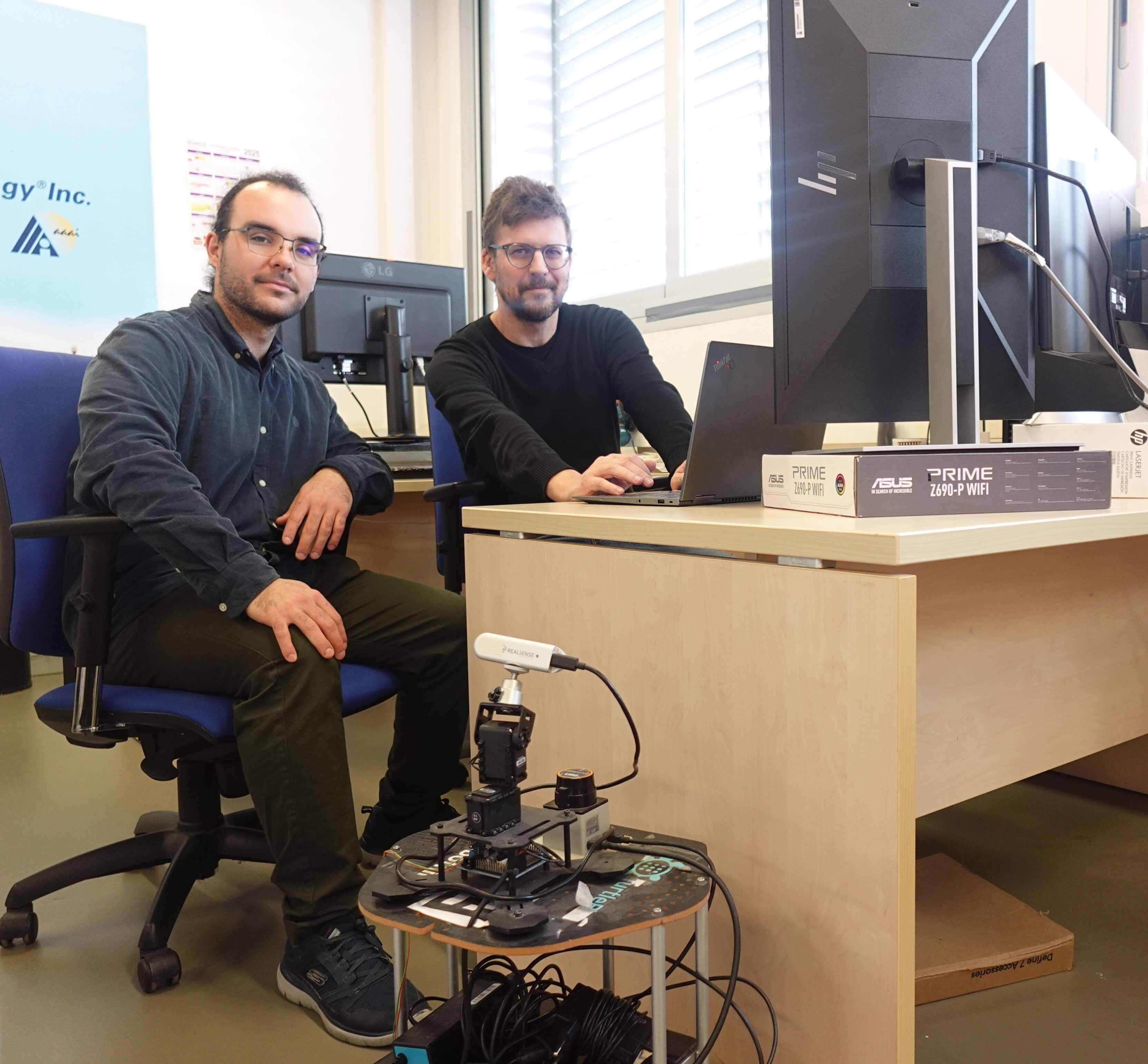
The Pose-Aware Visual Place Recognition (PAVPR) project has Javier Civera, from the RoPeRT group, as its principal investigator and is funded with €194,074.56. It aims to transform autonomous navigation by integrating deep learning models with three-dimensional perception into global Place Recognition (VPR) descriptors, thus overcoming the limitations of state-of-the-art methods, which lose accuracy in the face of changes in weather or lighting.
By moving away from the conventional model of local features, this approach not only seeks to ensure accurate and robust motion estimation in real-world conditions, but also to optimize computational cost and enhance data privacy. In addition, PAVPR envisions the development of new evaluation standards and seeks to align with European guidelines to create safer, more reliable, and more efficient artificial intelligence and robotics systems.
Alberto Jaenal emphasizes that obtaining this Marie Skłodowska-Curie (MSCA) grant “is a real honor, as it represents the European institutions' endorsement of my career as a researcher, something that is particularly gratifying after so many years of work and effort. Beyond the recognition, this grant is also a unique opportunity to continue evolving and contributing to the current challenges facing the scientific community.”
Regarding his joining the University of Zaragoza, he states that it is “a privilege, a national and international benchmark in the field of robotics and computer vision. I am convinced that this boost will be key to my professional future, as it will allow me to access many new opportunities and goals in my scientific career.”
In total, in this call for proposals, the University of Zaragoza has secured three European “Marie Curie” grants to attract young talent of excellence, with overall funding of €600,000. The other two researchers will join the BIFI institute and the IA2.
A total of 16,936 applications were submitted to the European call for proposals, of which only 1,610 were awarded, with total funding of €404 million distributed by the European Commission in the 2025 edition, under the Horizon Europe program.
The I3A has eight proposals recognized with the Seal of Excellence, reflecting the institute's high scientific level in a highly competitive call for proposals with cut-off scores above 96.8 in the ENG panel.
MSCA website information:
Information about MSCA at the University of Zaragoza: See press release.