A team of researchers from the Aragón Engineering Research Institute (I3A) at the University of Zaragoza, led by Jaime Ibáñez Pereda, is going to develop a smart platform designed for the continuous monitoring of nervous system activity in patients with neurological disorders that affect movement control.
The team is working to conduct an initial validation of the technology in patients with Parkinson's disease. Currently, there are more than 10 million people worldwide with this diagnosis, and it remains one of the most difficult neurological disorders to diagnose and monitor. Its current monitoring depends on subjective assessments and indirect measurements, which limits the accuracy in controlling its progression and developing personalised therapies. The project aims to create objective, reliable and easy-to-use biomarkers that can be measured in real conditions (during daily activities).
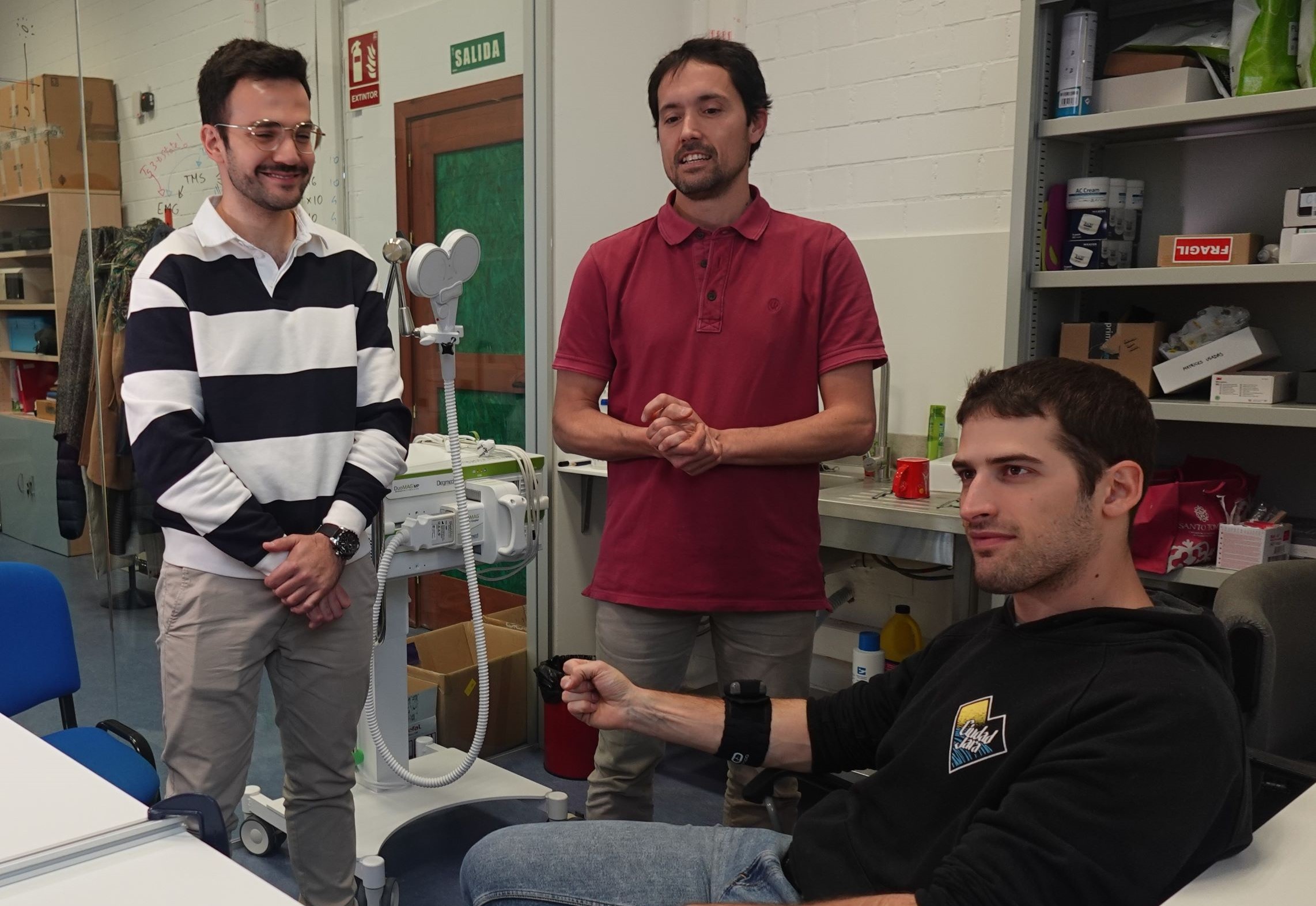
To this end, they will develop a device called ParkEMG, a neural interface that will integrate sensors that record muscle electrical activity and inertial sensors with intelligence to selectively capture muscle and movement data in everyday life. This will enable a more reliable and rapid diagnosis of this disease, objective monitoring, and improved quality of life for patients. It will include capabilities to measure, among other indicators, movement biomarkers such as bradykinesia (abnormal slowness of movement) and tremor.
This work will be carried out in parallel with the ECHOES project, led by Jaime Ibáñez, from the Biomedical Signal Interpretation and Computational Simulation (BSICoS) research group. It studies muscle activity as a window into the brain, developing methods for decoding brain activity from measurements of muscle activity. The project began in 2023 with funding from the European Research Council (ERC).
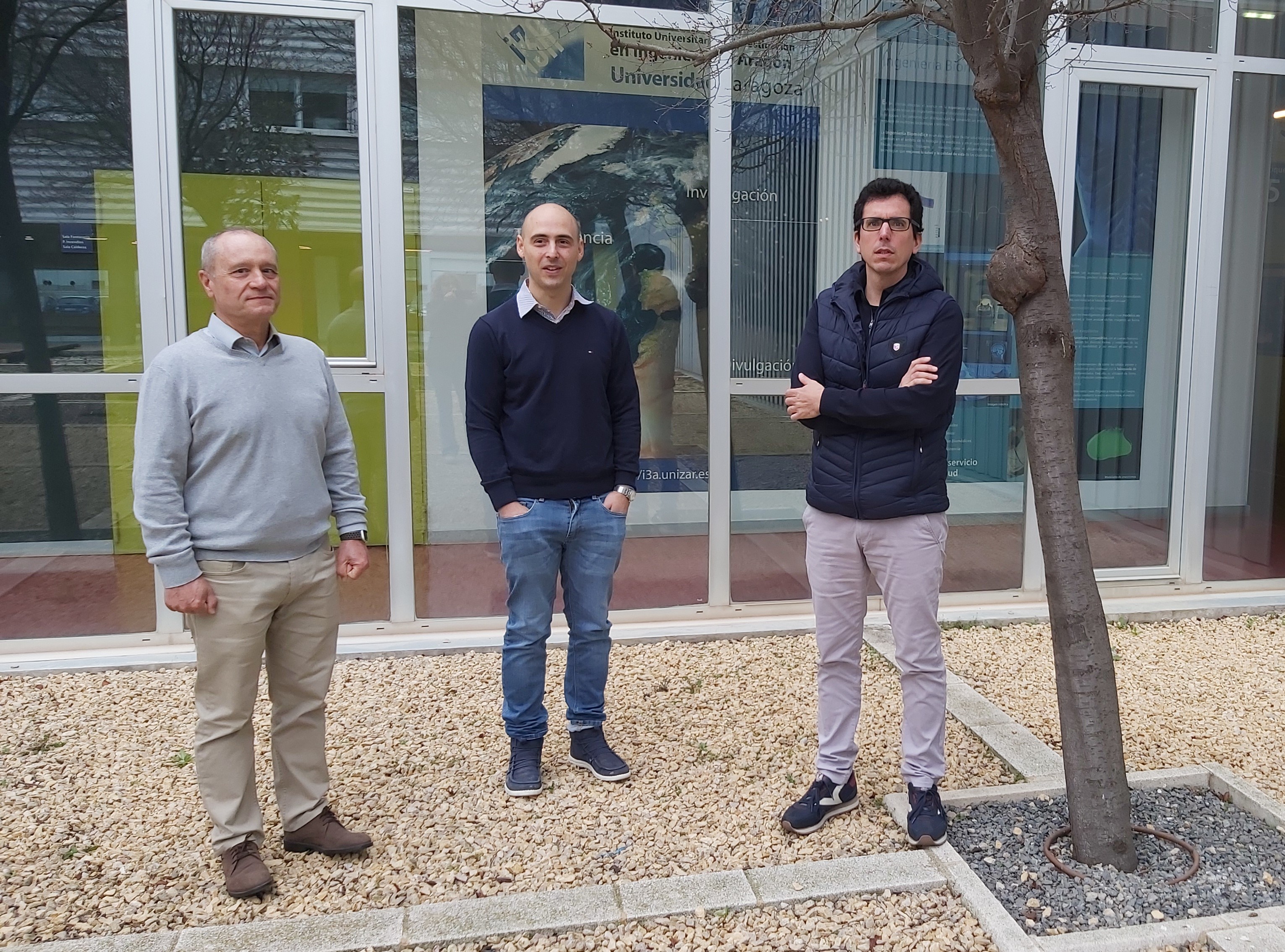
Now, this same organisation has awarded him one of its Proof of Concept grants, worth €150,000, which will be used to advance this new device, ParkEMG. The team working on this Proof of Concept project includes, in addition to the principal investigator, two other researchers from the BSICoS group (Rodrigo Lozano and Alejandro Pascual) and professors from other departments at the University of Zaragoza, Raquel Ortega (Faculty of Economics and Business) and Juan Marín (Faculty of Medicine).
A prototype will be created and validation trials will be conducted on healthy volunteers and patients with Parkinson's disease. At the same time, market and intellectual property studies will be carried out to lay the foundations for its future application.
26 ERC projects at the University of Zaragoza
The University of Zaragoza has had 26 ERC projects since 2009, with a total amount of €40.7 million, and ranks among the top five Spanish universities in the national ranking by number of ERCs obtained in the Horizon Europe programme. The 26 ERC projects of excellence obtained by the Aragonese public campus are distributed among the following categories: Proof of Concept, 5; ERC-Starting, 9; ERC-Consolidator, 5; ERC-Advanced, 5; and Synergy Grant, 2 (one coordinated by Unizar and the other as a collaborating entity).
The European Research Council (ERC) Proof of Concept (PoC) grants are designed to enable the results of excellent research to make the leap from the laboratory to the real world. These grants are aimed at researchers with projects funded by the ERC, either already underway or completed in the year prior to the call for proposals, and are intended to explore the technological and social transfer potential of their discoveries, develop prototypes, conduct initial tests, study possible commercial applications and define strategies for bringing these technologies to market and society.
In this context, the ParkEMG PoC, derived from the ERC Starting Grant ECHOES project, will enable progress towards the practical application of innovative technology, reinforcing I3A Unizar's commitment to excellent research at the service of society.
With this new grant, there are now 12 ERC projects led by I3A researchers, with total funding of €13.86 million. Specifically, ERC projects from 2012 to the present are divided into four categories: Starting Grants (5), Consolidator Grants (2), Advanced Grants (1) and Proof of Concept (3), consolidating I3A as one of the benchmarks for research excellence at European level.
While awaiting the results of the second Proof of Concept 2025 call for proposals, in the first Proof of Concept 2025 call, Spain ranked as the second European country with the most projects selected, with a total of 20 initiatives funded, behind only Germany, which led the list with 27 projects.
This project is funded by the European Union, Horizon Europe research and innovation programme.
The views and opinions expressed are the sole responsibility of the author(s) and do not necessarily reflect those of the European Union. Neither the European Union nor the awarding authority can be held responsible for them.