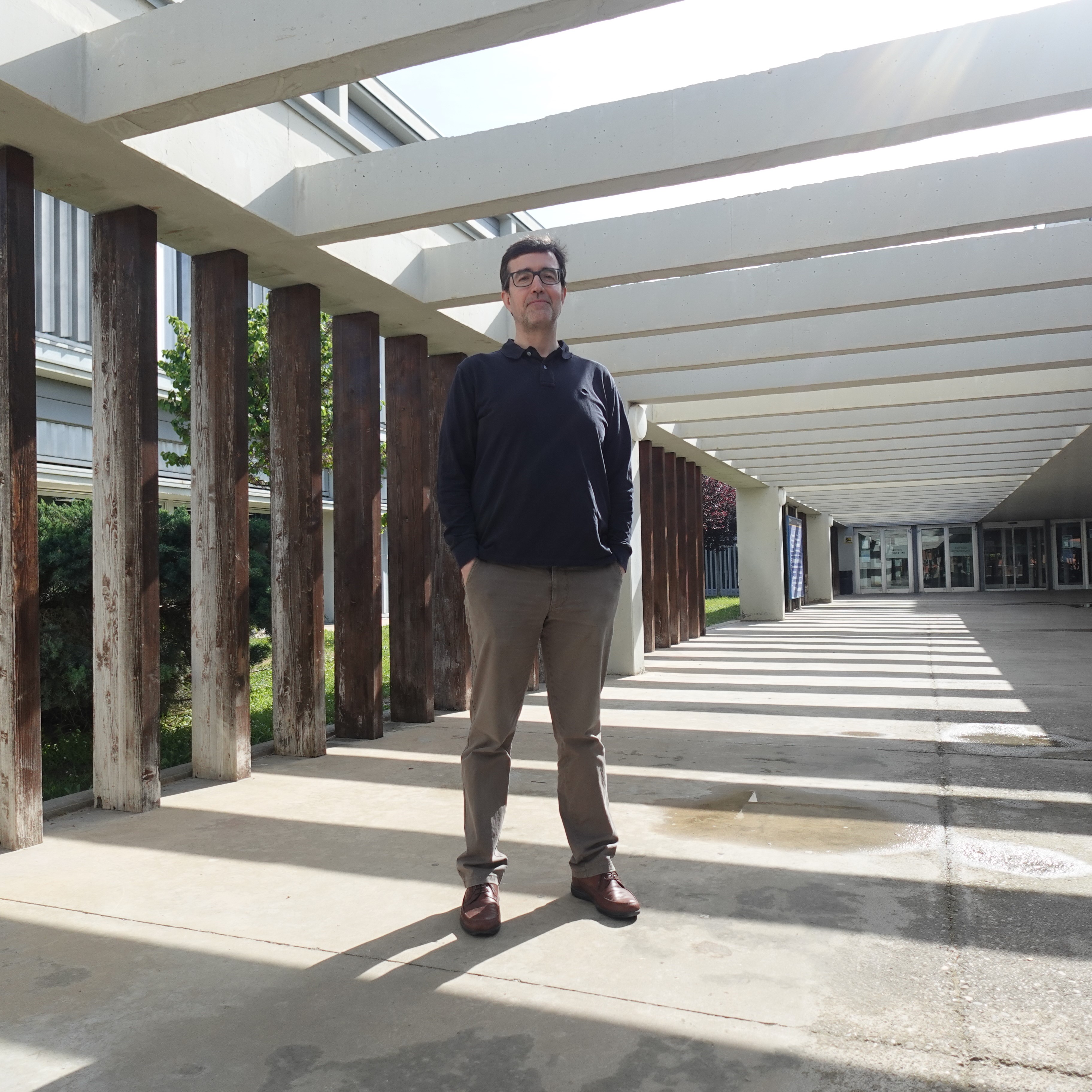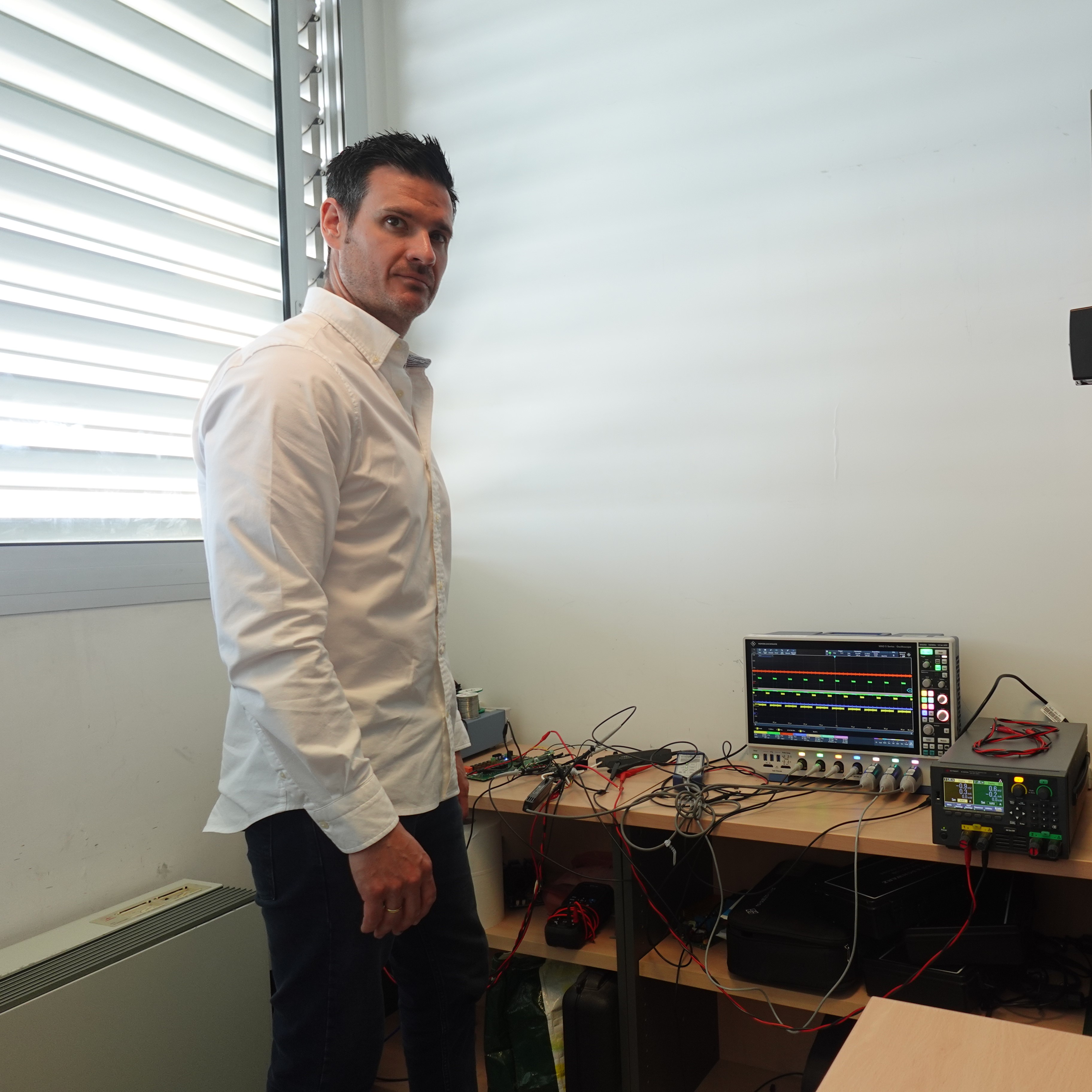
What led you to a career in research?
After finishing my degree, I was lucky enough to intern at BSH, where I realized there was a whole world yet to be discovered. I fell in love with research there. I saw that not everything was solved, that there were so many areas where we could still push boundaries. That was my spark.
In which areas have you focused your research?
In three main pillars. I started with induction at BSH, due to our proximity to their Induction Competence Development Center. Later, I launched a new research line for electric vehicles. We started from scratch, and the progress since then has been immense. The same happened with Biomedical Engineering; that area didn't exist here either, and we built it from the ground up. In that field, we work on electroporation and pulsed electric field applications.
Is there a project that stands out as particularly meaningful to you?
I "grew up" with induction, so I’ll always have a special affection for it. However, the biomedical and electric vehicle lines have been more challenging. We were starting from zero with no prior knowledge of those specific applications. It was a completely different environment compared to induction hobs, suddenly we were working with biological tissues, in operating rooms, or dealing with the heavy constraints of the automotive industry.
How do you see the future of your field? What are the key trends or challenges?
The common thread of my work is power electronics; it is the core of what I do. This field has seen massive breakthroughs thanks to the development of new semiconductors and substrates. While the induction sector is very mature, and our collaboration with BSH is world-class, optimizing those designs is becoming an ever-greater challenge. In electric vehicles, however, there is still much to be done because the architecture isn't fully consolidated yet. Tesla has been a great catalyst, pushing other manufacturers to catch up, but there’s a long road ahead. The same applies to biomedicine. It's not just about the power electronics we handle; on the biological side, it's essential to truly understand the phenomena at play to make progress. That is incredibly difficult and not yet fully resolved.
Could you tell us about the SPEED Project and the ERC Consolidator Grant?
These grants are highly prestigious in our field. There are three levels, Starting, Consolidator, and Advanced, depending on how long ago you received your PhD. I secured the Consolidator, the mid-tier grant. It allows you to research with a great deal of freedom for five years, providing almost unlimited resources to hire staff or purchase equipment. This is the first time such a grant has been awarded in Spain for power electronics. It’s the foundation that allows you to focus entirely on your work without the constant worry of securing funding. We named the project SPEED because we want to go much faster. We are taking the fundamentals of power electronics and pushing them a step further. The challenge is to refine the very engine behind all these applications, making them highly optimized and cost-effective.
What do you enjoy most about being a researcher?
The discovery. Knowing there are pending challenges and trying to fill those gaps as creatively as possible. Currently, many applications require us to be more cost-competitive because the Asian market is so strong; other times, we are faced with problems that seem impossible but eventually find a solution. That is truly rewarding.
What advice would you give to someone looking to get into research?
The most essential ingredient is motivation. If you are motivated, I believe you can break through any barrier that a discipline or application throws at you.
Up Close...
What did you study? Telecommunications Engineering.
A dream: Given the way the world is moving, to have stability and to be able to guarantee that stability for my children's future.
A hobby: I like building and renovating things. For instance, working on my own house.
A book: I’m currently reading The 7 Habits of Highly Effective People.
A movie or series: I like things that help me unwind, anything like Futurama.
A record, a band, or a singer: Electronic music in general.
A trip: A trip I took with my wife to India had a profound impact on me. A total shift in mindset.
How would you define yourself? Personally, I’d say I’m motivated and restless.